Web cookies (also called HTTP cookies, browser cookies, or simply cookies) are small pieces of data that websites store on your device (computer, phone, etc.) through your web browser. They are used to remember information about you and your interactions with the site.
Purpose of Cookies:
Session Management:
Keeping you logged in
Remembering items in a shopping cart
Saving language or theme preferences
Personalization:
Tailoring content or ads based on your previous activity
Tracking & Analytics:
Monitoring browsing behavior for analytics or marketing purposes
Types of Cookies:
Session Cookies:
Temporary; deleted when you close your browser
Used for things like keeping you logged in during a single session
Persistent Cookies:
Stored on your device until they expire or are manually deleted
Used for remembering login credentials, settings, etc.
First-Party Cookies:
Set by the website you're visiting directly
Third-Party Cookies:
Set by other domains (usually advertisers) embedded in the website
Commonly used for tracking across multiple sites
Authentication cookies are a special type of web cookie used to identify and verify a user after they log in to a website or web application.
What They Do:
Once you log in to a site, the server creates an authentication cookie and sends it to your browser. This cookie:
Proves to the website that you're logged in
Prevents you from having to log in again on every page you visit
Can persist across sessions if you select "Remember me"
What's Inside an Authentication Cookie?
Typically, it contains:
A unique session ID (not your actual password)
Optional metadata (e.g., expiration time, security flags)
Analytics cookies are cookies used to collect data about how visitors interact with a website. Their primary purpose is to help website owners understand and improve user experience by analyzing things like:
How users navigate the site
Which pages are most/least visited
How long users stay on each page
What device, browser, or location the user is from
What They Track:
Some examples of data analytics cookies may collect:
Page views and time spent on pages
Click paths (how users move from page to page)
Bounce rate (users who leave without interacting)
User demographics (location, language, device)
Referring websites (how users arrived at the site)
Here’s how you can disable cookies in common browsers:
1. Google Chrome
Open Chrome and click the three vertical dots in the top-right corner.
Go to Settings > Privacy and security > Cookies and other site data.
Choose your preferred option:
Block all cookies (not recommended, can break most websites).
Block third-party cookies (can block ads and tracking cookies).
2. Mozilla Firefox
Open Firefox and click the three horizontal lines in the top-right corner.
Go to Settings > Privacy & Security.
Under the Enhanced Tracking Protection section, choose Strict to block most cookies or Custom to manually choose which cookies to block.
3. Safari
Open Safari and click Safari in the top-left corner of the screen.
Go to Preferences > Privacy.
Check Block all cookies to stop all cookies, or select options to block third-party cookies.
4. Microsoft Edge
Open Edge and click the three horizontal dots in the top-right corner.
Go to Settings > Privacy, search, and services > Cookies and site permissions.
Select your cookie settings from there, including blocking all cookies or blocking third-party cookies.
5. On Mobile (iOS/Android)
For Safari on iOS: Go to Settings > Safari > Privacy & Security > Block All Cookies.
For Chrome on Android: Open the app, tap the three dots, go to Settings > Privacy and security > Cookies.
Be Aware:
Disabling cookies can make your online experience more difficult. Some websites may not load properly, or you may be logged out frequently. Also, certain features may not work as expected.
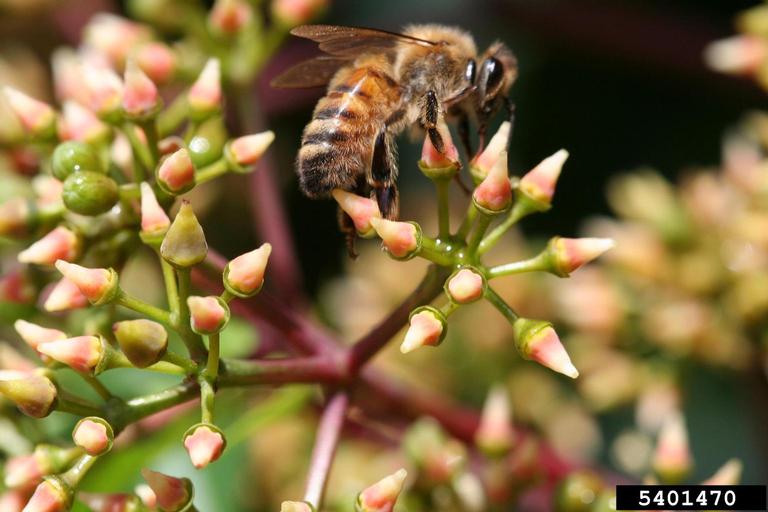
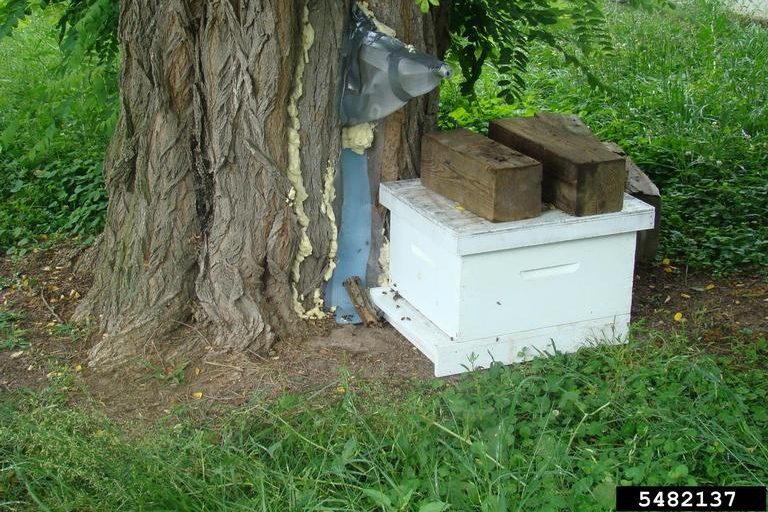
Ryan Jones, Colonial Williamsburg Foundation, Bugwood.org
Honey bees are the most iconic and popularized of the bees, and for good reason. They are smaller and less stout than bumble bees and can be identified through lack of hair on the eyes, and lack of Tibial Spurs. Tibial spurs are protrusions on the end of the tibia which insects use to aid in digging, a problem no honey bee encounters through their life in a wax hive. Keep a look out for sacs of collected pollen on the bees hind legs. Identification of a hive can be a give away as to the identity of nearby bees as they live in an above ground wax hive. It is advised not to approach or agitate the hive without equipment or professional guidance as these bees will string to fend off intruders. When a honey bee stings, it leaves behind its venom sac and stinger, killing the bee. It is said the aroma of a bee sting is similar to a banana, however this smell is a pheromone that alerts other bees to danger.
Bumble Bee (Bombus)
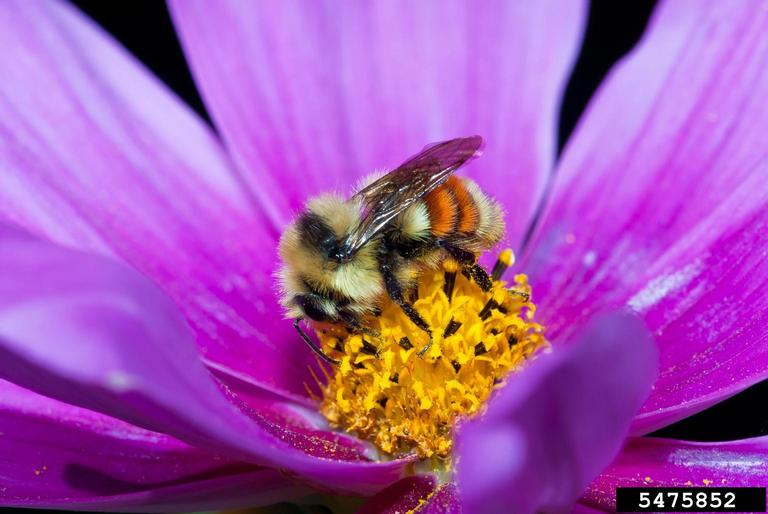
Peter Wirtz, Bugwood.org
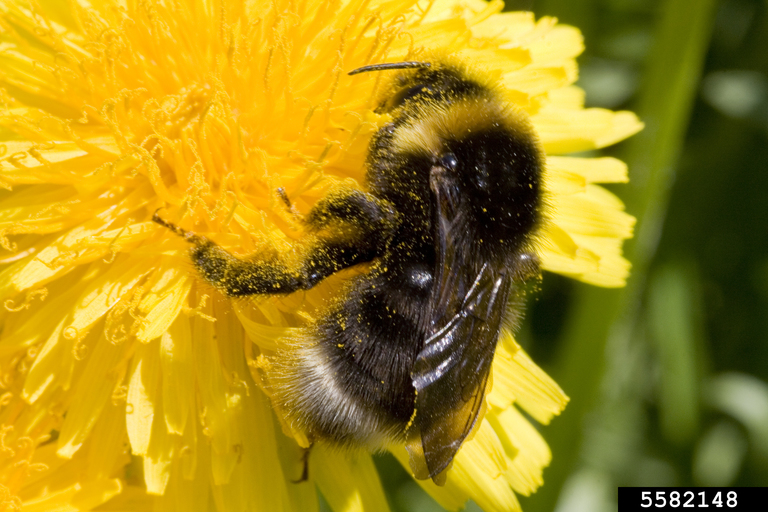
Mary C Legg, Mary C Legg, Bugwood.org
These stout bees are covered in dense hairs and share the same aposematic coloration of black and yellow bands to warn predators of their defense. They have a rounded abdomen, a contrast to the sharp edges of the honey bee. They also have hair on all segments of their body, as well as short hair on their eyes. Bumblebees also collect pollen, storming it in their hind legs, and are prolific pollinators. They are also social bees and build their nests underground, typically inhabiting pre-built underground structures such as abandoned rodent dens. The hole can be identified by the presence of bumble bees entering and exiting the hive, as well as dead bumblebee and larvae surrounding the entrance, placed there by workers cleaning the hive. These hives are significantly smaller in size compared to honey bees and do not overwinter, other than the queen that will diapause until spring. Because they do not overwinter, they do not stockpile honey in the same manner as honey bees, meaning they are beneficial primarily due to pollination.
Squash Bee (Peponapis & Xenoglossa)
Susan Ellis, Bugwood.org
Jim Jasinski, Ohio State University Extension, Bugwood.org
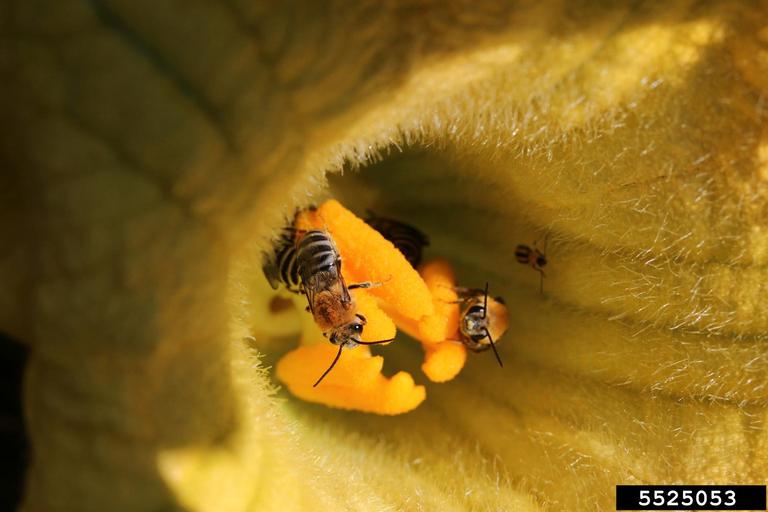
Squash bees are specialists that derive their pollen from solely squashes, pumpkins, and gourds. Specialized pollinators have a higher chance of successful pollination than generalist pollinators because they are only visiting these specific crops in succession, vastly increasing the odds of pollen contact. They have specialized hair on their hind legs which is able to hold the large pollen of their selected vegetable species however, identification should not rely solely on the presence of these hairs as they are only possessed by female bees. These bees are stout, with comparable sizing to bumble bees, and also have large antennae and can be found often by their plants of choice. Squash bees are solitary and females will dig a burrow within the first 6 – 12 inches of ground. Because of this, conservation efforts of these bees focus on minimization of topsoil in areas that contain these bees.
Whitney Cranshaw, Colorado State University, Bugwood.org
Whitney Cranshaw, Colorado State University, Bugwood.org
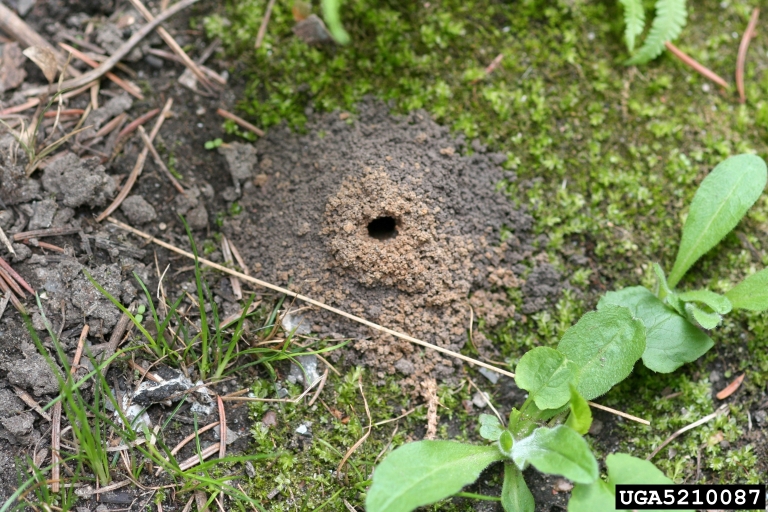
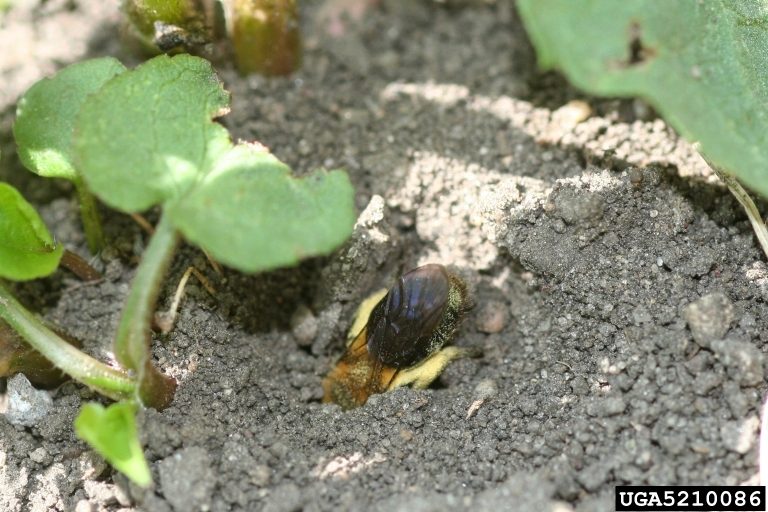
Solitary ground nesting bees encompass the majority of bee species in the world. All females dig nests that they inhibit and lay their eggs within. The walls on the tunnel are reinforced and waterproofed with a wax like secretion from the female and the larvae is left with a storage of pollen, scavenged by the female. These bees can be identified by the distinct shape of the entrance to their tunnels, which is a small, conical mound of soil. These bees will establish themselves and return to the same tunnel for multiple years. These tunnels are made in loose, dry soils, as the bees must dig them individually. They are not considered pests as they do not bore into wood to create nests and will only confront humans when highly provoked. If you identify these holes on your property, do not disturb the soil or flood the ground as this will lead to the eradication of these important pollinators.
Carpenter Bees (Xylocopa)
Jim Baker, North Carolina State University, Bugwood.org
David L. Clement, University of Maryland, Bugwood.org
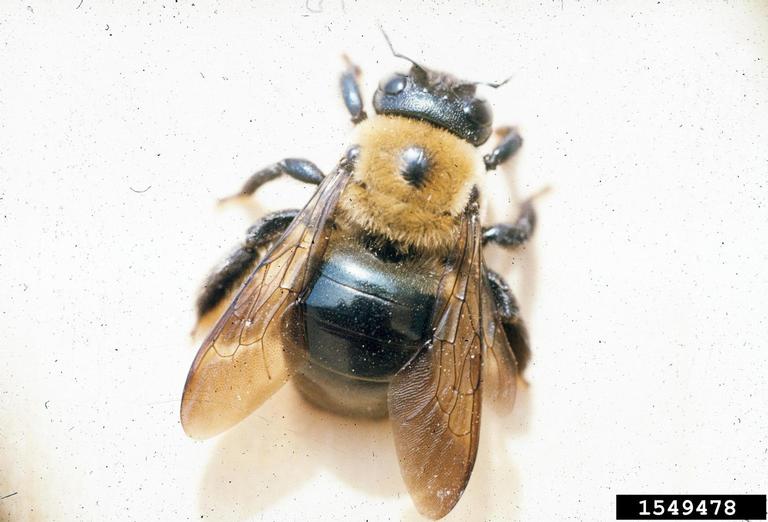
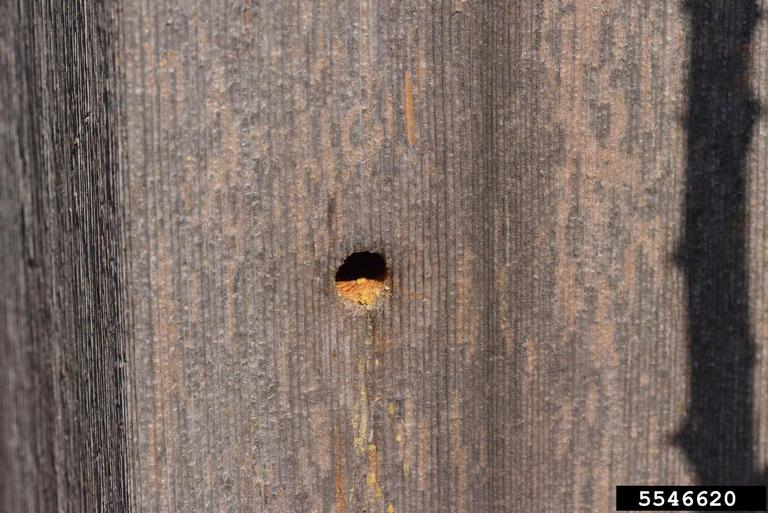
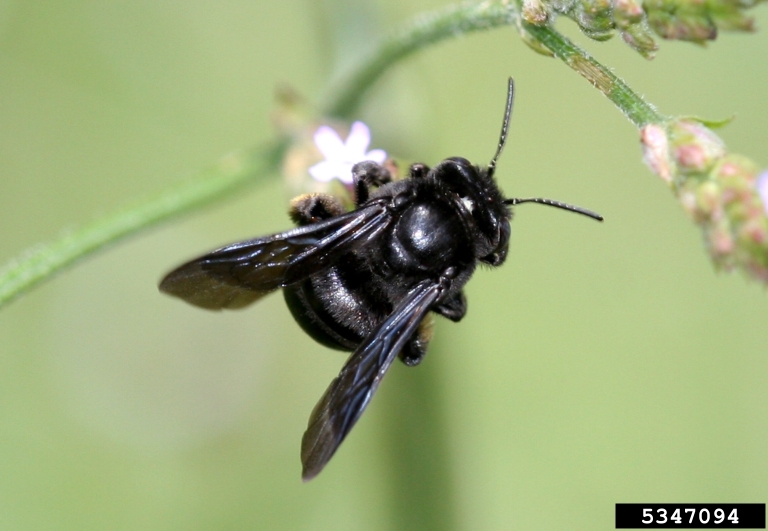
Carpenter bees are easily identifiable by the lack of hairs on their shiny abdomen. While they are often confused with bumble bees due to their similar appearance, they have vastly different behaviors and survival strategies. They bore holes in dead wood to be used as incubation chambers for their young. These tunnels have one entrance that is identifiable by a small, perfectly circle hole. Within these tunnels are multiple branch paths layered with capsules of developing larvae, each capsule equipped with an egg and a stockpile of pollen as a food source for development. The wood that is borne is not consumed by the bee, as they feed on nectar as adults, and pollen as larvae. These bees are often considered pests due to their damage to infrastructure such as homes. Management of these bees with the use of insecticide is not advisable due to the environmental ramifications of pesticides, and the eradication of a vital pollinator. An alternative is to paint or varnish exposed wood, which deters the bees. Aswell, the plugging of previously inhabited wood holes prevents the bees from reusing previous tunnels. There are also varieties of wood boring carpenter bees that are comparatively much smaller than the conventional appearance of wood boring bees. These bees have the same behaviors, however can have different correlations such as completely iridescent green. Carpenter bees are easily identifiable by the lack of hairs on their shiny abdomen. While they are often confused with bumble bees due to their similar appearance, they have vastly different behaviors and survival strategies. They bore holes in dead wood to be used as incubation chambers for their young. These tunnels have one entrance that is identifiable by a small, perfectly circle hole. Within these tunnels are multiple branch paths layered with capsules of developing larvae, each capsule equipped with an egg and a stockpile of pollen as a food source for development. The wood that is borne is not consumed by the bee, as they feed on nectar as adults, and pollen as larvae. These bees are often considered pests due to their damage to infrastructure such as homes. Management of these bees with the use of insecticide is not advisable due to the environmental ramifications of pesticides, and the eradication of a vital pollinator. An alternative is to paint or varnish exposed wood, which deters the bees. Aswell, the plugging of previously inhabited wood holes prevents the bees from reusing previous tunnels. There are also varieties of wood boring carpenter bees that are comparatively much smaller than the conventional appearance of wood boring bees. These bees have the same behaviors, however can have different correlations such as completely iridescent green.
Sweat Bees (Numerous Genera)
Susan Ellis, Bugwood.org
Joseph Berger, Bugwood.org
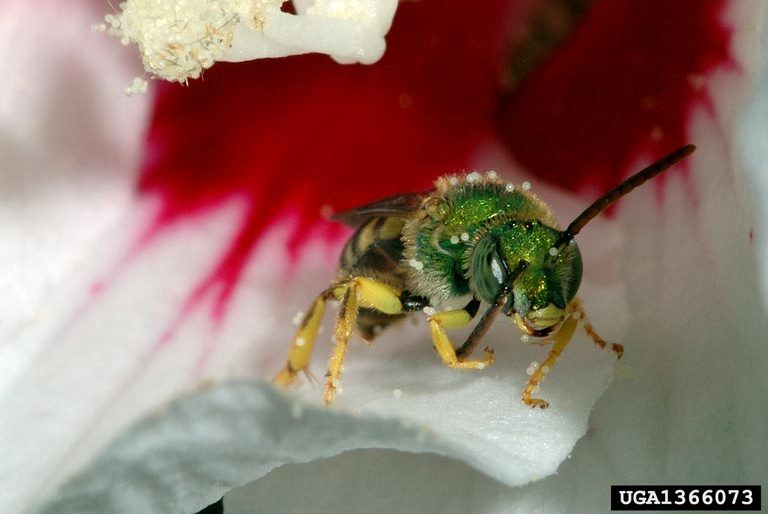
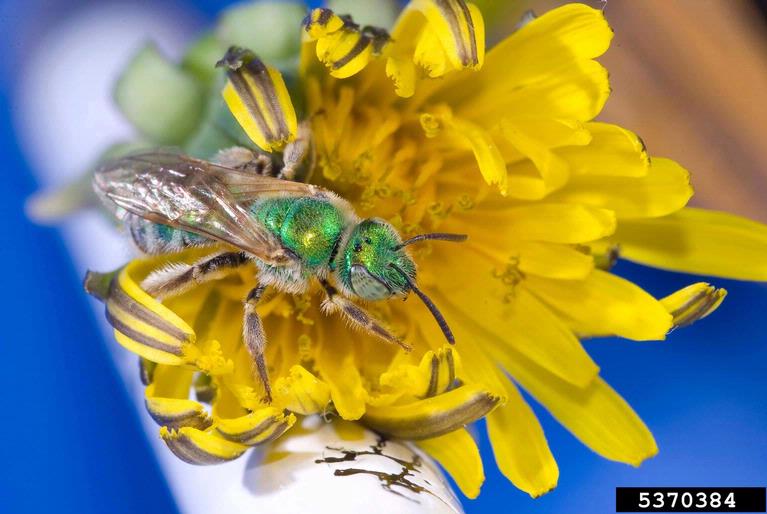
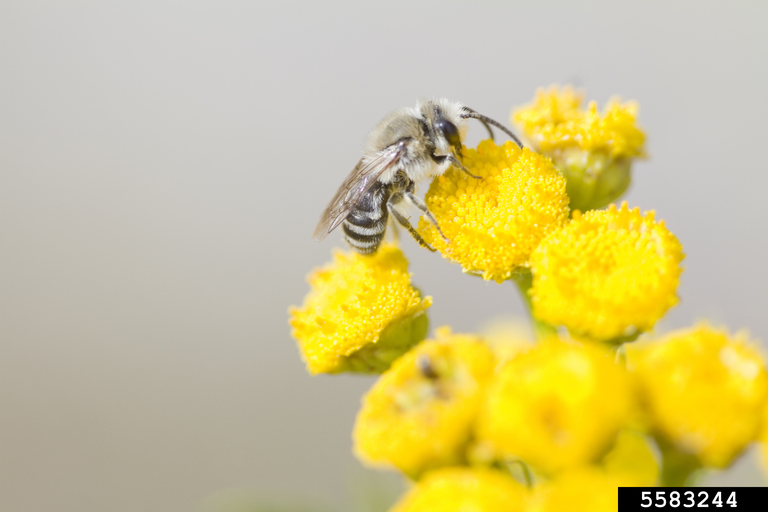
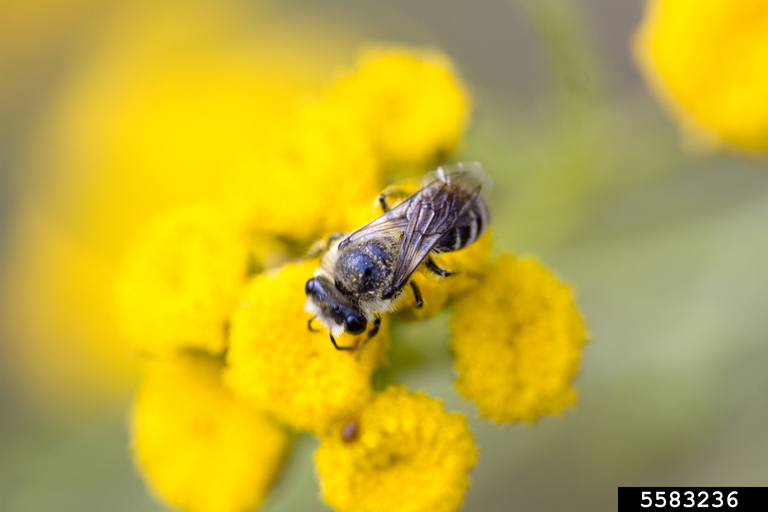
Sweat bees are a diverse group of bees that includes solitary, and eusocial varieties. Some sweat bees are even nocturnal, a unique characteristic of bees. The characterizing feature of these bees is a curved basal vein within the wings of these bees. They are often metallic black or green, though all species do not fit this mold. Many bore nests in media such as rotten wood to create tunnels for young and all provide stockpiles for their young, though some through parasitism. These bees have gained notoriety from their habit of flying close to humans and many times landing on them as a result of their attraction to the perspiration of humans. Because of this they have been dubbed as sweat bees.
Long Horned Bees (Melissodes)
Johnny N. Dell, Bugwood.org
Johnny N. Dell, Bugwood.org
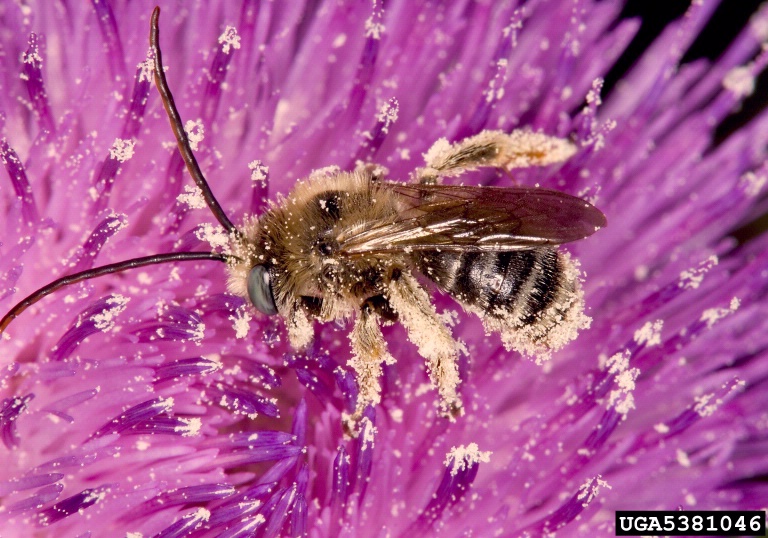
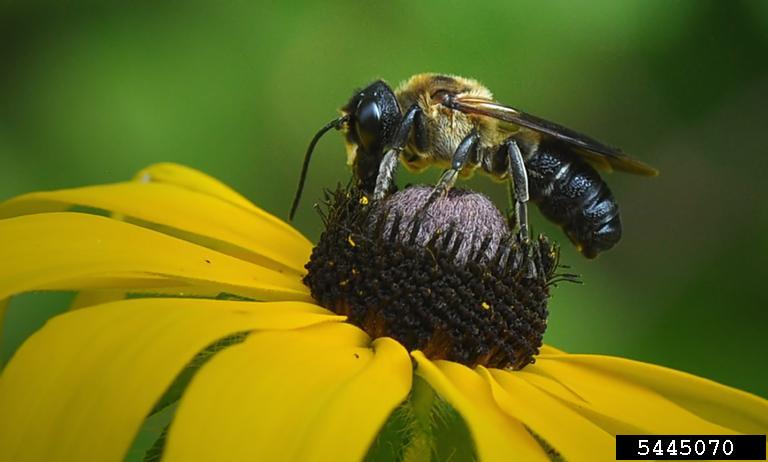
Long horned bees are identifiable by their elongated antennae. The females share this feature, however it is not as pronounced as the males, as well as feathery leg hairs for pollen collection. These are another species of ground boring bees that create shallow tunnels for larvae development. They are generalist pollinators with a preference for the aster family of plants, though they are proficient and prized for their capacity to pollinate squash, pumpkins and gourds. One identifying behavior is the males sleeping aggregations, in which multiple males will use their mandibles to latch onto a plant stem to sleep during the night. These pollinators are another example of beneficial that emphasize the importance of soil conservation.
These bees, (often called mason or leafcutter bees) are solitary bees that can be identified by a unique mechanism in which they use to collect pollen. Many bees store pollen on hairs and “pollen baskets” located on their hind legs, however with the Megachilidae, the pollen holding hair structures instead encompass the entirety of the lower abdomen. Some parasitic species of these bees lack this pollen collection mechanism, using other bee’s stores of pollen to feed. These bees utilize pre-built cavities such as holes between stones to create similar larvae capsules to other boring bees. These bees obtained their nickname through the collection and utilization of materials such as leaves.
Plasterer Bees (Colletes)
Mary C Legg, Mary C Legg, Bugwood.org
Mary C Legg, Mary C Legg, Bugwood.org
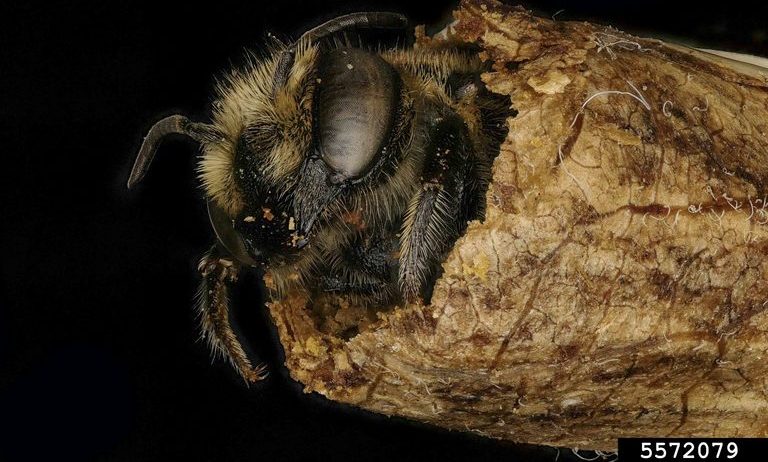
Plasterer bees are typically honey bee sized and exhibit similar traits of tunnel creation, brood capsules and mass provisioning as other bee species, however they also exhibit the unique trait of lining their tunnel walls with a polyester substance. This substance is secreted by the bee’s salivary glands and coats the entirety of the inside of the tunnel to protect the brood. Often these bees will create their broods by tunneling into soft wood, which often hosts numerous other species of insects such as ants, predatory beetles, and parasites that would consume the brood. This polyester substance gives the bees their nickname and provides an important defense against these predators.